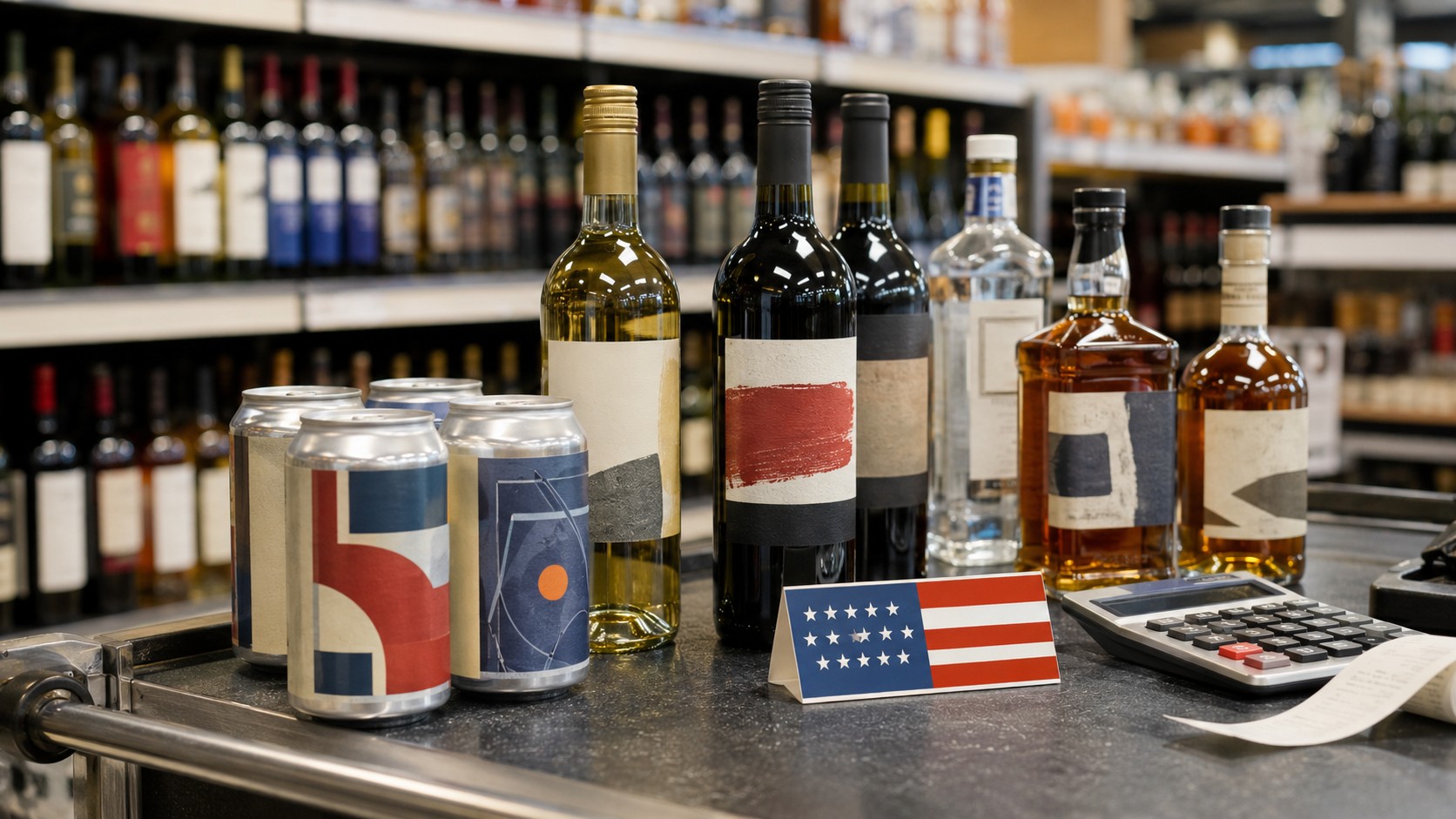
Saskatchewan to add 50% levy to U.S. alcohol starting September 8
Saskatchewan is imposing a 50 per cent levy on American-made alcohol beginning September 8, escalating its response to the continuing trade dispute between Canada and the United States.
The measure follows a 50 per cent U.S. tariff on Canadian alcohol that took effect August 22.
The Saskatchewan government says the levy will apply to alcohol produced in the United States and ordered by Saskatchewan retailers through the Saskatchewan Liquor and Gaming Authority’s online system on or after September 8.
What it means for consumers
The levy will be charged when retailers order U.S.-made beer, wine and spirits—not as a separate fee added directly to a customer’s bill at the till.
However, Saskatchewan consumers could eventually pay more for American alcohol if retailers pass the additional cost along through higher shelf prices.
Products already in store inventories before the measure takes effect will not be subject to the new levy at the time of ordering. This means the effect on prices may vary by retailer and may not appear immediately.
The province has not said how long the levy will remain in place. Its stated goal is to have tariffs removed on both sides of the border through a negotiated settlement.
Province shifts its approach
Saskatchewan had previously resisted government restrictions on American alcohol, leaving residents to decide whether to continue buying U.S. products.
Premier Scott Moe said sales of American alcohol in the province have already fallen by approximately 40 per cent, while Saskatchewan-made products have recorded stronger sales.
The province changed its position after the United States introduced the new tariff on Canadian alcohol.
Deputy Premier and Finance Minister Jim Reiter said Saskatchewan would prefer tariff-free trade but could not ignore measures affecting the province’s producers, exporters and communities.
The government describes the levy as a targeted response intended to defend Saskatchewan businesses without prolonging the wider trade dispute.
Local alternatives could benefit
The measure may encourage more consumers to choose beer, wine and spirits produced in Saskatchewan or elsewhere in Canada.
Local producers could benefit from greater demand, although Saskatchewan businesses that import or sell American products may face higher costs and reduced sales.
Glenn Valgardson, chief executive officer of Regina-based Pile O’ Bones Brewing Company, said the trade dispute is already increasing costs for Saskatchewan businesses. He welcomed efforts to support local employers and suppliers.
Saskatchewan alcohol purchases are also subject to the province’s existing 10 per cent Liquor Consumption Tax. The government has not announced any change to that tax.
No support for taxes on oil or potash exports
While supporting targeted countermeasures, Moe said Saskatchewan would oppose Canadian export taxes on potash and oil.
He argued that a potash export tax could threaten Canadian jobs, raise fertilizer costs for farmers and encourage American buyers to seek supplies from other countries.
The premier also warned that taxing Canadian oil exports could increase fuel costs, including in parts of Eastern Canada that rely on petroleum products transported through the United States.
Businesses and families could feel the effects
The province plans to hold industry discussions to monitor how U.S. tariffs and Canadian countermeasures are affecting Saskatchewan businesses, workers and families.
Moe said approximately six per cent of Saskatchewan’s economy is affected by U.S. tariffs. Canadian counter-tariffs cover about 11 per cent of the province’s imports from the United States, representing an estimated $1.6 billion in goods.
The premier acknowledged that retaliatory measures can also harm Canadian businesses and consumers. He said federal support may be needed for sectors affected by the dispute.
Saskatchewan trades with more than 160 countries, but the United States remains the province’s—and Canada’s—largest trading partner.
The government says its preferred outcome is a return to stable, tariff-free trade between the two countries.
The 50 per cent levy on U.S.-produced alcohol takes effect September 8.
No comments on this post yet. Be the first!